

Is Pawleys Island SC a Good Place to Live? (2026)
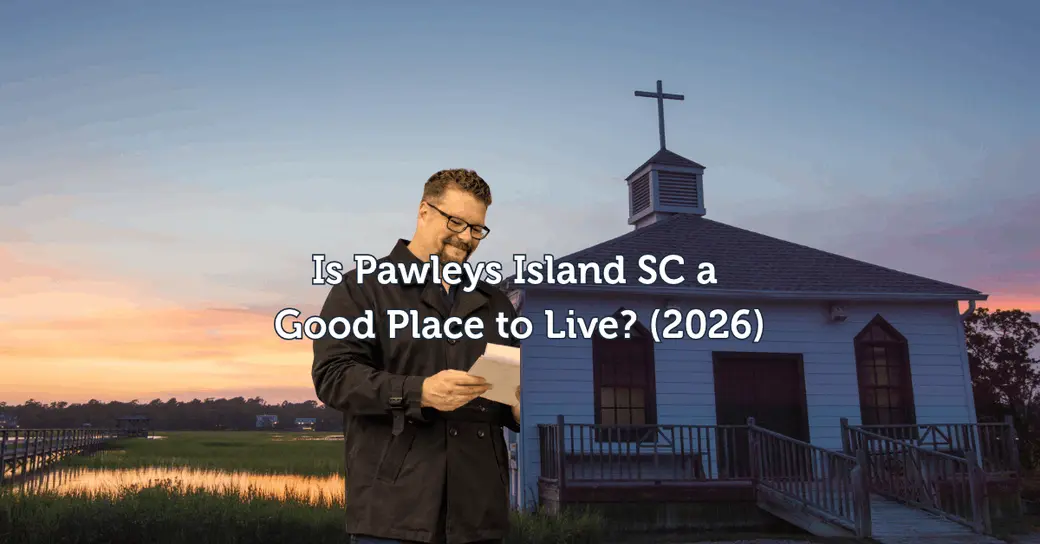
Is Pawleys Island SC a Good Place to Live? What to Know Before Moving There
If you've been looking at homes along the southern end of the Grand Strand, you've probably come across Pawleys Island.
And if you've ever spent an afternoon there, you already know it feels a little different from Myrtle Beach.
The historic beach houses.
The oak trees.
The marshes.
The restaurants tucked along Highway 17.
And that unmistakable Lowcountry character.
But here's something I want you to understand before you start looking at homes.
Having a Pawleys Island address and actually living on Pawleys Island are two very different things.
And if you're relocating from another state, that distinction can make a huge difference in what you think you're buying.
I've called the Myrtle Beach area home for 13 years, and one thing I've learned is that the name on a real estate listing doesn't always tell you what everyday life at that address will look like.
Let's talk about Pawleys Island, what makes it different, and what you need to know before buying here.
Quick Answer
Pawleys Island offers access to Atlantic Ocean beaches, tidal marshes, golf courses, restaurants, shopping, established residential neighborhoods, and Lowcountry scenery in southern Georgetown County.
Housing ranges from historic island cottages and waterfront properties to condos, townhomes, golf communities, and single-family homes farther inland.
The most important things to consider are the property's exact location, beach access, flood exposure, insurance costs, HOA restrictions, and driving distances.
The biggest mistake is assuming every property with a Pawleys Island mailing address offers the same coastal experience.
Pawleys Island Is Two Different Geographic Conversations
Let's start with something that confuses a lot of relocation buyers.
There is the actual Town of Pawleys Island, located on a narrow barrier island between the Atlantic Ocean and the salt marsh.
And then there's the much larger mainland area where numerous homes and communities use Pawleys Island mailing addresses.
Those aren't interchangeable.
The island has a relatively small number of properties, historic cottages, beach access points, and a distinctly coastal setting.
The mainland includes shopping centers, restaurants, golf communities, established subdivisions, newer developments, and a much wider variety of housing.
So when somebody tells me they're interested in Pawleys Island, one of the first things I want to clarify is exactly which area they're talking about.
Because that decision changes the housing search considerably.
The Island Has a Long History
Pawleys Island is known for its history as a coastal retreat, with roots extending back centuries.
You'll still see older beach cottages and architectural styles that reflect that history.
The island's narrow geography also shapes the experience.
Ocean on one side.
Marsh on the other.
And a limited number of roads connecting the island to the mainland.
That setting is part of what makes the island distinctive.
But it also means buyers need to think carefully about coastal exposure, property maintenance, access, parking, and insurance.
A historic beach house can be a wonderful property.
It can also involve ownership considerations that are very different from buying a newer home several miles inland.
Most Pawleys Island Homes Are on the Mainland
This is where the housing options really open up.
On the mainland, you'll find single-family homes, condos, townhomes, golf course properties, gated communities, and waterfront opportunities.
Some communities have pools, clubhouses, tennis or pickleball facilities, walking paths, and other amenities.
Others have different layouts and fewer shared facilities.
You'll also find considerable differences in lot sizes, architectural styles, HOA structures, and maintenance requirements.
That's why I don't like treating Pawleys Island as one housing market.
A property on the barrier island and a property in a mainland golf community may share a mailing address, but they're not directly comparable.
Beach Access Isn't the Same Everywhere
This is one of the first things I'd investigate when comparing properties.
If you're buying directly on Pawleys Island, proximity to the ocean may be a major part of the property's appeal.
But if you're looking at a mainland neighborhood, you'll generally need to travel to a beach access point.
And here's where the details matter.
Which access point will you use?
Is there public parking?
How far is the drive?
What happens during peak beach season?
And if you're considering a golf cart, is the route actually legal under South Carolina law and any applicable local restrictions?
Don't assume a Pawleys Island address means you can drive a golf cart to the beach.
Verify the route, not just the mileage.
Golf Is a Big Part of the Area
Pawleys Island and the surrounding southern Grand Strand have a substantial golf presence.
Communities and courses associated with the area include Pawleys Plantation, Heritage Club, and other established golf destinations.
But golf community living isn't one standard package.
Some properties are located along a golf course.
Some communities have club memberships available separately.
Others may have amenities that aren't included in the HOA dues.
Before purchasing, find out exactly what comes with the property and what requires an additional membership or fee.
And if you're buying a golf course home, consider the location of the fairway, cart paths, maintenance areas, and any applicable course-related easements.
A beautiful view is only one part of the decision.
What About Shopping and Restaurants?
One of the things that surprises some relocation buyers is how much is available along the mainland Highway 17 corridor.
You'll find grocery stores, restaurants, pharmacies, local shops, and everyday services.
Pawleys Island also has a well-established dining scene, with restaurants offering everything from casual meals to more elaborate dining experiences.
But the convenience of those amenities depends on your address.
A property close to Highway 17 may provide relatively direct access to shopping and services.
A home farther into a residential community may require additional driving.
And a property on the island presents a different set of routes entirely.
That's why I encourage buyers to check the places they'll actually visit regularly.
Not just the attractions that look good in a relocation brochure.
Pawleys Island vs. Murrells Inlet
This is a useful comparison because the two areas are relatively close geographically.
Murrells Inlet is known for its MarshWalk, inlet-related recreation, waterfront restaurants, and a wide range of residential communities.
Pawleys Island offers its own mix of ocean access, historic island properties, mainland neighborhoods, golf, and Lowcountry attractions.
Both areas have restaurants, shopping, outdoor recreation, and residential housing.
The differences depend heavily on the particular properties being compared.
A mainland Pawleys Island golf community may share more characteristics with a Murrells Inlet golf community than with a historic cottage on Pawleys Island itself.
That's why I'd compare the individual neighborhoods, ownership costs, amenities, and driving routes rather than assuming one entire area is automatically better than the other.
Flood Zones and Coastal Insurance Matter
If there's one part of the homebuying process I wouldn't rush in Pawleys Island, it's understanding insurance and coastal exposure.
The barrier island is directly exposed to coastal weather conditions.
Mainland properties can have very different elevations, drainage characteristics, and flood risks.
And being outside a high-risk FEMA flood zone doesn't mean a property is immune from flooding.
Before purchasing, I'd want to review the property's flood-zone designation, available flood-risk information, and insurance quotes.
I'd also pay close attention to homeowners insurance, wind and hail coverage, named-storm deductibles, and any separate flood insurance requirements.
If you're comparing a coastal property with one farther inland, make sure you're comparing the total cost of ownership.
Not just the mortgage payment.
HOAs and Property Restrictions Vary
Many mainland Pawleys Island communities have homeowners associations.
And those associations can be very different.
Some provide extensive recreational amenities and common-area services.
Others have a more limited role.
Before buying, review the governing documents and financial information.
Look at the dues.
Any known or planned assessments.
Parking restrictions.
Rental policies.
Pet rules.
Exterior modifications.
Boat and RV storage.
And exactly which amenities or services are included.
The right time to discover a restriction is before purchasing the property.
Not after you've moved in.
New Construction vs. Established Homes
The broader Pawleys Island area includes established neighborhoods and newer residential development.
And both deserve consideration.
New construction may offer newer systems, modern floor plans, builder warranties, and available incentives.
Established properties may offer mature landscaping, existing improvements, different lot sizes, or architectural features not commonly found in newer developments.
The age of a home alone doesn't determine its value.
I'd compare condition, construction quality, warranties, insurance costs, location, and community restrictions.
And if you're touring builder model homes, remember that the builder's sales representative works for the builder.
You can arrange your own representation, subject to applicable registration requirements and agreements.
Don't Forget the Drive
Pawleys Island is south of Myrtle Beach, and the location matters if you regularly travel throughout the Grand Strand.
Highway 17 is the primary north-south corridor through much of the area.
Depending on where you live, trips toward Murrells Inlet, Myrtle Beach, Conway, or Georgetown can involve very different travel times.
And seasonal traffic can change the experience.
My advice is simple.
If you're seriously considering a property, drive the routes you'd actually use.
To the grocery store.
To your workplace, if applicable.
To healthcare appointments.
To the beach.
To wherever you expect to spend your time.
Because the house might look perfect on paper.
But you still have to live with its location.
My Bigg Take
Here's what I think buyers need to understand about Pawleys Island.
It's not one neighborhood.
It's not one price range.
And it's certainly not one kind of property.
The historic barrier island offers a very different ownership experience from the mainland communities.
And even on the mainland, the differences between neighborhoods can be substantial.
So don't start by asking whether Pawleys Island is better than Myrtle Beach or Murrells Inlet.
Start with the property itself.
Where is it?
What's around it?
How do you get to the beach?
What are the insurance costs?
What restrictions come with ownership?
And how does it fit the things you actually plan to do?
Because here's something I tell relocation buyers all the time.
You're not just buying the house. You're buying the location, the costs, and everything that comes with living there.
Get those pieces right, and you're making a much more informed decision.
Frequently Asked Questions
Is Pawleys Island actually an island?
Yes. The Town of Pawleys Island is located on a barrier island along the Atlantic Ocean. However, many properties with Pawleys Island mailing addresses are located on the mainland outside the town limits.
Is Pawleys Island part of Myrtle Beach?
No. Pawleys Island is in Georgetown County, south of Myrtle Beach. The Town of Pawleys Island is a separate municipality, while many surrounding properties use Pawleys Island mailing addresses.
Are there homes in Pawleys Island that aren't on the beach?
Absolutely. The mainland area includes single-family homes, condos, townhomes, golf communities, and other residential properties that are not directly on the ocean.
Does Pawleys Island have flood risk?
Yes. Flood exposure varies by property. Barrier-island locations face direct coastal exposure, while mainland properties have different flood and drainage considerations. Buyers should research the specific property and obtain insurance quotes.
Does Pawleys Island have HOA communities?
Yes. Many mainland residential communities have homeowners associations. Fees, amenities, restrictions, and maintenance responsibilities vary by community.
Can you drive a golf cart to the beach in Pawleys Island?
That depends on the property's location, the route, and applicable state and local laws. Buyers should verify whether a specific golf-cart route is permitted before relying on it for beach access.
Related Reading
-
Where Should You Live in Myrtle Beach? The Ultimate Grand Strand Relocation Guide
-
Is Murrells Inlet SC a Good Place to Live? What to Know Before Moving There
-
Is Carolina Forest a Good Place to Live? What to Know Before Moving There
-
Is Conway SC a Good Place to Live? What to Know Before Moving There
-
Myrtle Beach vs. North Myrtle Beach: Which One Is Better for Full-Time Living?
About the Author
Bigg Lloyd Dotson is a Myrtle Beach real estate agent with LPT Realty and host of the Living Bigg in Myrtle Beach podcast. After living in Connecticut for 21 years, Bigg relocated to the Grand Strand and has now called the Myrtle Beach area home for 13 years.
Today, he helps buyers and sellers throughout Myrtle Beach, North Myrtle Beach, Murrells Inlet, Pawleys Island, Carolina Forest, Conway, and communities across the Grand Strand.
His content focuses on relocation, coastal living, local real estate, and helping people understand what everyday life on the Grand Strand is actually like before making a move.
Thinking About Moving to the Grand Strand?
Every buyer's definition of the perfect coastal lifestyle is different.
If you're comparing Pawleys Island, Murrells Inlet, Myrtle Beach, or another Grand Strand community, I'd be happy to help you understand the housing options, ownership costs, and location differences.
📞 833-ASK-BIGG
Live Bigg. Move Smart. Coast Easy.
Categories
Recent Posts




"If you’re thinking about buying or selling and want a little more clarity, this is simply a way to start the conversation. I’ll take the time to understand what you’re looking for, answer your questions honestly, and help you decide what makes sense for you — no pressure, no sales pitch. "
GET MORE INFORMATION